
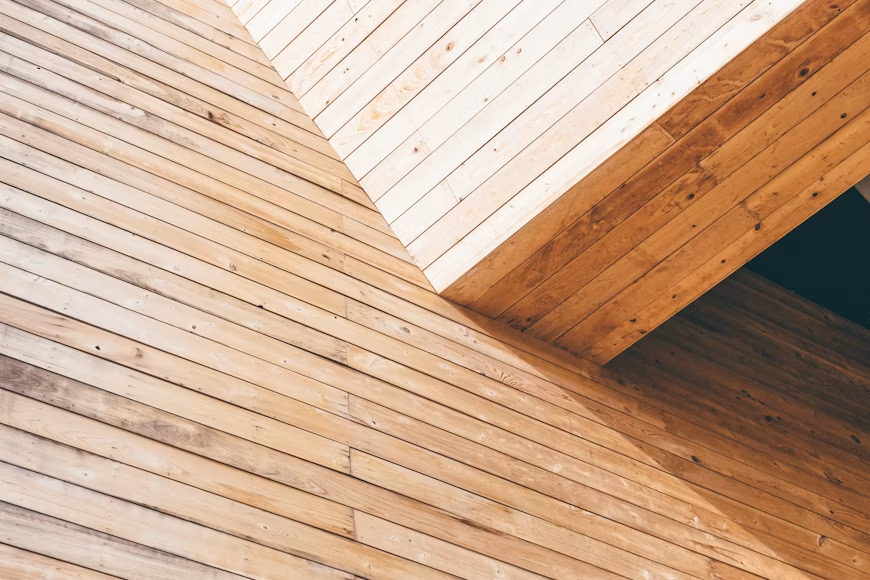
Wooden facades are having a serious moment in modern architecture right now.
Glass and concrete high-rises have been dominating our city skylines for decades. Now architects and homeowners are reclaiming wood as a source of building material. And it’s for a few excellent reasons: Wooden facades can:
- Unmatched natural beauty
- Real environmental benefits
- Long-lasting durability
The best part is that they work with almost any style of structure. Whether it’s a residential home or commercial skyscraper.
Here’s the full breakdown…
Here’s what’s inside:
- Why Wooden Facades Are Making a Comeback
- Choosing the Right Wood Material
- The Aesthetic Advantages
- Environmental Benefits That Actually Matter
- Modern Innovations in Wooden Facades
Why Wooden Facades Are Making a Comeback
The numbers speak for themselves…
Mass timber building construction is booming. Forbes reported that there are 2,833 mass timber projects completed or underway across the U.S. – that’s an increase of nearly 1,000x since there were only three such projects in 2009.
So what’s driving this shift? A few big factors:
- Growing focus on sustainability
- Better wood treatments that boost durability
- New building codes allowing taller wood structures
- Rising demand for biophilic design
The outcome? Wood is taken seriously as an architectural material that can go head-to-head with steel and concrete in any application.
Choosing the Right Wood Material
Not all wood is created equal.
If you’re designing a facade that you want to stand the test of time, your choice of wood is critical. Oak is one of the most desirable types of wood for exterior cladding. It’s hardy, weather resistant and ages incredibly well. That’s why architects who purchase wholesale oak timber for facade work know that they can rely on having a uniform quality throughout a project. You can’t get that if you mix and match small quantities from several sources.
Other popular options for wooden facades include:
- Cedar: Naturally resistant to rot and insects
- Larch: Great for wet climates
- Thermally modified ash: Enhanced dimensional stability
- Douglas fir: Strong and affordable
- Oak: Long-lasting with a beautiful grain pattern
Your wood selection determines aesthetics, durability of the facade, maintenance frequency and cost and overall project budget. Choose wisely.
The Aesthetic Advantages
Wooden facades bring something no other material can match…
Natural warmth.
Glass and concrete can seem chilly and sterile. Wood brings warmth. It adds texture, colour and character that make buildings feel more inviting – and more human.
Here’s what makes wooden facades so visually stunning:
- Natural grain patterns that are one of a kind on every plank
- Colour that shifts over time as the wood weathers naturally
- Rich textures that add depth to flat surfaces
- Warmth that photographs beautifully in any light
And there’s another benefit most people don’t think about…
Wood can be combined with nearly any material. Stone, metal, glass or concrete – wooden facades offer a beautiful contrast that accentuates buildings. Architects love that versatility.
Consider projects such as Bosco Verticale in Milan or University of Washington’s Founders Hall. Wood is going into some of the most Instagrammed buildings from the past decade – and consumers are taking notice.
Environmental Benefits That Actually Matter
This is where wooden facades really shine…
Building and construction creates the majority of the world’s carbon emissions. Wood can help solve this problem. According to Turner & Townsend, mass timber generates 30% less CO2 than a similar building made of concrete. It also creates 50% less carbon emissions than steel buildings.
That’s a big deal.
Here’s why wood is so much better for the planet:
- It’s renewable: Trees can be regrown and forests can be managed sustainably
- Locks away carbon: One cubic metre of wood product retains approximately one tonne of CO2
- It’s lightweight: Which means smaller foundations and lower transport emissions
- It’s biodegradable: No landfill nightmares at the end of the building’s life
But there’s more…
Wooden facades can also lead to better air quality inside the building. Since wood regulates humidity on its own, the air is healthier inside. People who work in these buildings are more productive. People who live in these buildings have better wellbeing.
Note: Not all wood is created equal. Ensure that any wood you use is sourced from well-managed forests. Purchase wood that is certified by the FSC or PEFC – these are the two most reputable eco-labels.
Modern Innovations in Wooden Facades
Wooden facades aren’t just about tradition. They’re about innovation too.
Advancements in technology have expanded the potential of wood as a construction material. Here are some of the exciting ways how:
Thermal modification: Wood structure is altered making it more stable and dimensionally less prone to warp or be affected by moisture and decay. Long lasting wood with no chemicals.
High-performance coatings: Today’s protective coatings can guard against UV rays, pollution and moisture. Facades will stay beautiful a lot longer – sometimes decades longer – than unprotected wood.
Transparent wood: Yes, transparent wood is actually a thing. Scientists have developed see-through wood that has the durability of nature but the transparency of glass. This material could revolutionize facade design in the near future.
Prefabricated panels: Panels for wooden facades can now be prebuilt in a factory and taken to the site ready for installation. This saves time on construction and produces less waste – two major concerns for any builder.
Hybrid systems: These systems utilize wood along with either steel or concrete. You get wooden exteriors with steel supporting structure only where it is needed. Ideal for high-rise structures.
Its these advancements that allow wood facades to compete with steel and concrete systems today. And the technology keeps improving…
Bringing It All Together
Wooden facades tick every important box for modern architecture…
They look amazing. They’re environmentally friendly. They can last generations with proper upkeep. And they work on almost any building style.
Advancements in mass timber and improved wood treatments have solidified this trend as here to stay. Expect to see even more wood facades in the future as sustainable living continues to climb to the top of builders’, architects’ and homeowners’ lists of priorities.
Here’s a quick recap:
- Wood adds warmth, texture and character to modern buildings
- It sequesters carbon and reduces emissions compared to steel or concrete
- Choosing the right wood type is critical for longevity
- Modern treatments make wood more durable than ever
- Prefabricated panels speed up construction and cut waste
Bottom line: if you’re contemplating a new build or renovation project, consider using wooden facades. They offer the aesthetic appeal of a natural material with actual eco-credentials – and few can argue with that combo.